

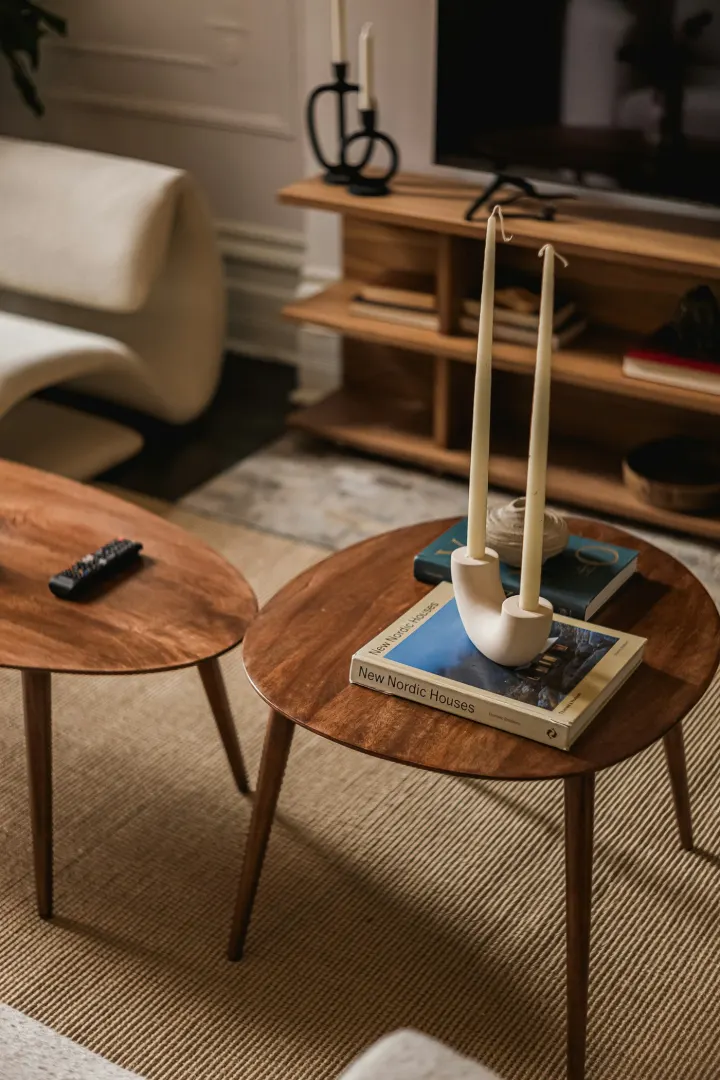
Refreshing a room often brings new furniture to mind. Yet its mood can shift when a throw moves, a wooden surface becomes visible or a colour repeats in a different corner. Working with what you already own can help you notice more clearly what you actually like.
Read the palette you already have
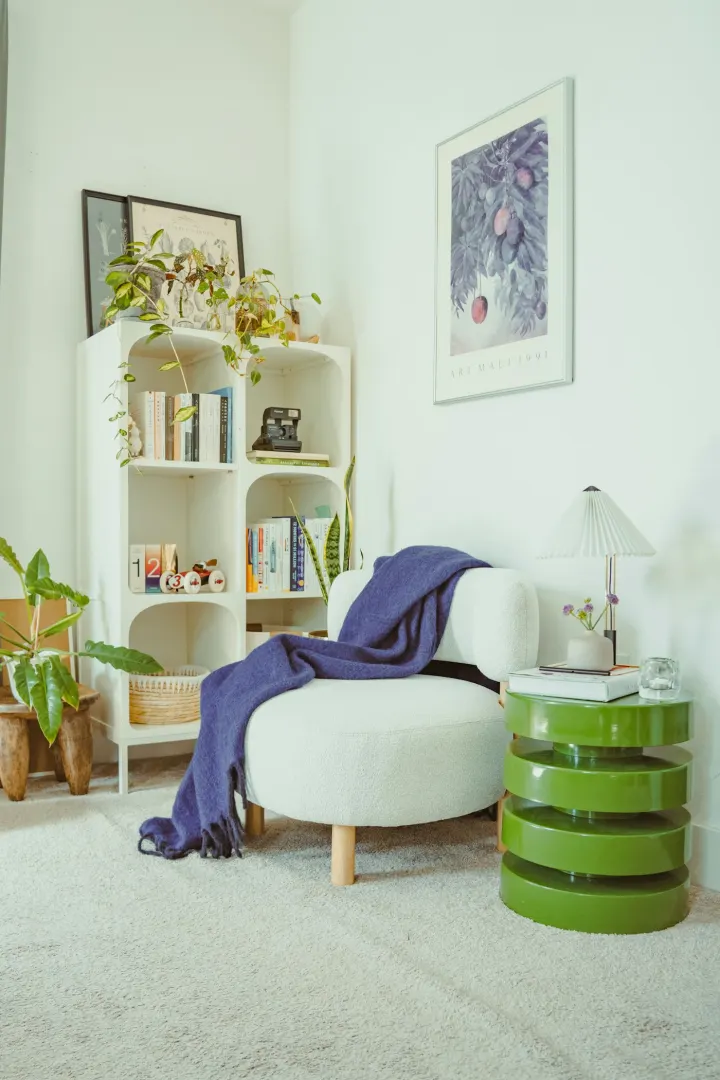
Take a photograph of the room and note three dominant tones. The walls, the warmth of the floor and the fabric of a chair can be your starting points. Treat them as materials to work with rather than problems to correct. If the larger surfaces already establish a palette, smaller choices can build a conversation with it.
Three roles, a flexible balance
Foundation: A tone already present across the room’s larger surfaces.
Companion: A second tone repeated through wood, fabric or ceramics.
Accent: A more noticeable colour in a cushion, book cover or small object.
This is not a rule about percentages. It is a way of making decisions easier. One object you love can be enough of a starting point. Try echoing its colour in a small detail somewhere else in the room.
Give texture a role too
Two fabrics of a similar colour can feel very different beside each other. Try a coarse weave against a smooth surface, or matte ceramics beside wood. Every object does not have to stand out. Some pieces can provide a quiet background that allows another detail to feel more deliberate.
A personal room is not made of matching pieces, but of pieces that make sense together.
Test a single corner
Choose one surface you want to reconsider.
Reduce the objects on it and try two different arrangements.
Look in daylight and evening light, then live with the useful version for a few days.
Consider daily use as well as the photograph. Is there still a place to set down a cup? Can you reach the books? Look for the point where an appealing arrangement is also easy to live with. Sometimes the best finishing touch is moving something rather than adding it.

Comments 0
A good article starts a conversation.
Sign in to join the conversation.
Sign in